Why the First Ingredient on a Label Matters
Learn what the first ingredient on a label can tell you about a packaged food, where ordering rules have limits, and how to compare similar products.
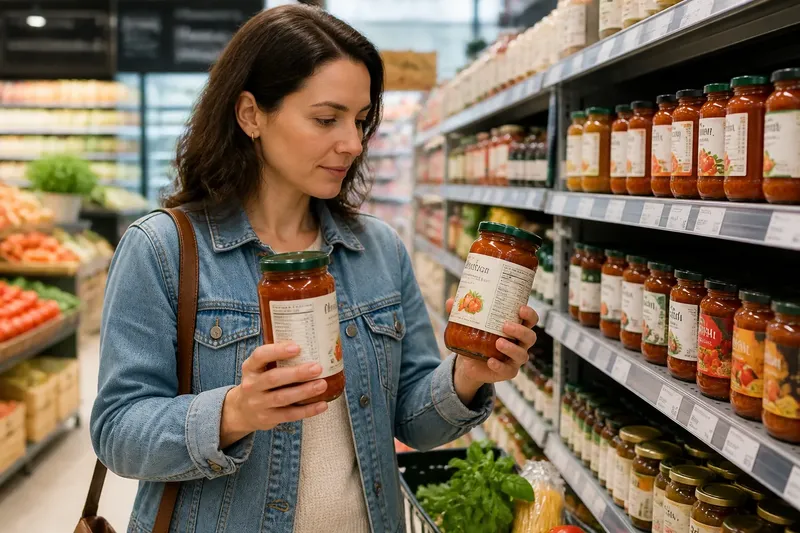
At the supermarket, you turn a jar of pasta sauce around and find tomatoes at the top of the ingredients list. That position offers a useful clue, but it does not describe the sauce on its own. The first ingredient on a label is generally the largest listed ingredient by weight under the applicable rules—not a verdict on the product’s character.
The first ingredient on a label reflects a ranking
Many jurisdictions require ingredients to be listed in descending order by weight, but the rules, exceptions and treatment of particular products differ by place. Check the labelling guidance that applies where the food is sold if a precise legal interpretation matters. In the usual pattern, the ingredient used in the greatest amount comes first, followed by ingredients used in smaller amounts.
This is a ranking, not a recipe. It does not reveal exact quantities, and the leading item need not make up most of the finished food. A small amount of salt, spice or raising agent can still shape flavour or texture, even if it appears near the end.
Use the opening position to ask what the product is built around, then read on.
The list cannot describe the finished food by itself
Ingredient order does not show how components interact or how processing changes them. A baked food may lose moisture, for example, so the proportions in the finished loaf do not necessarily match the relative weights of ingredients when they were combined. Nor does a list explain whether an ingredient is present for flavour, texture or another purpose.
Names can also make a list harder to interpret. An ingredient may appear under a technical or unfamiliar name, and related components can be listed separately. Their positions alone do not reveal their combined amount. If a term matters to your choice, check reliable local labelling information or ask the manufacturer rather than guessing.
Compare similar products with a specific question
Ingredient order is most useful when comparing foods with the same purpose. The first items in a loaf of bread and a jar of sauce are not meaningfully comparable; two breads or two sauces are a better match. Before looking at the list, decide what you want to know: which product foregrounds a particular ingredient, which has a flavouring you prefer, or which suits a recipe without extra seasoning?
- Check the leading ingredient: If it is the main food you expected, continue comparing; if not, consider another product or check whether the food is intended to be a blend.
- Scan the remaining ingredients: If you see additions you want, keep that product in consideration; if you do not, compare another option or plan to adjust the recipe.
- Notice repeated ingredient types: If related ingredients appear separately and their total matters to your decision, seek more information; otherwise, compare the list for the specific feature you care about.
- Read the nutrition panel for nutrient questions: If salt, fibre or another listed nutrient is your concern, use the panel’s stated serving information; if it does not answer your question, consult applicable product guidance.
- Consider how you will use the food: If it is ready to eat or already seasoned as you like, it may suit your plan; if it is an ingredient for cooking, choose an option that leaves room for your own additions.
- Check essential dietary or allergen details: If the label is unclear or conflicts with a need, do not rely on ingredient order; seek clarification from the manufacturer or a qualified professional where appropriate.
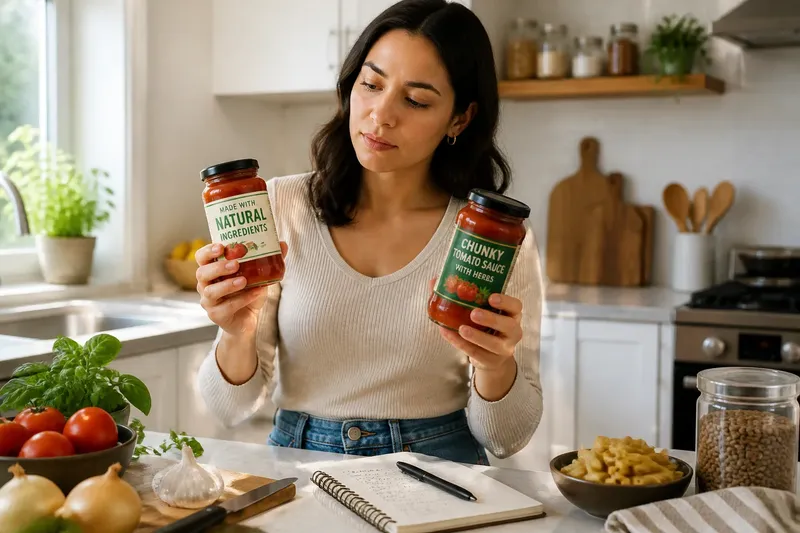
Imagine you are choosing between two jars of tomato sauce for pasta. For this invented comparison, Jar A lists tomatoes, water, olive oil and herbs; Jar B lists tomatoes, water, sugar and several flavourings. You want a sauce you can season yourself, so you check both full lists, note that Jar A’s named additions better fit that plan, and choose it. If you wanted a sweeter, ready-seasoned sauce instead, the same observations could lead you to Jar B. The ingredients guide the decision; your intended use determines which differences matter.
What can the first ingredient tell you?
Does the first ingredient make up most of the food?
Not necessarily. It is generally the largest listed ingredient by weight under the relevant ordering rules, but that does not establish that it accounts for most of the finished product.
Can ingredient order tell me whether a food is nutritious?
No. The order answers a limited question about the relative weight of listed ingredients, not the product’s overall nutritional qualities. For nutrient information, consult the nutrition panel and consider the food in the context of your needs.
Why might water appear near the top of a list?
Water can be a substantial ingredient in products such as soups, sauces and drinks. Its position reflects its place in the list, rather than whether the food suits a particular meal or dietary need.
Can I add up ingredients that seem related?
Their separate positions do not show a combined total. If that total is important to your choice, look for relevant information on the packaging or ask the manufacturer.
Read the ordering rules in their local context
Labelling requirements depend on where a product is sold and can include exceptions for particular foods or ingredients. A package may also provide additional declarations under local rules. If you are checking a specific legal requirement, allergen or dietary need, use the relevant official guidance and seek qualified advice where necessary; do not infer an answer from position alone.
For an everyday comparison, keep the question narrow. If you want to know which of two similar products lists more of a particular component by weight, compare their ingredient lists while remembering that rules and exceptions may apply. If you want to know about nutrients, preparation or suitability, use the information intended to address that question.
Let the first item guide your next question
The first ingredient on a label can orient you: it points to the largest listed component under the applicable ordering rules. It cannot tell you exact amounts, explain every ingredient’s role or settle whether the food suits your purpose. The most useful reading habit is to notice the opening item, then ask what other information would answer the decision you actually face.
Next time you pick up a familiar product, check whether its leading ingredient matches what you expected. If it does not, the rest of the list may explain the difference—or give you a reason to put it back.