Fresh, Frozen or Canned Peas for the Meal Ahead?
Fresh, frozen or canned peas suit different dishes. Compare their texture and cooking needs, then choose the form that fits your meal and timing.
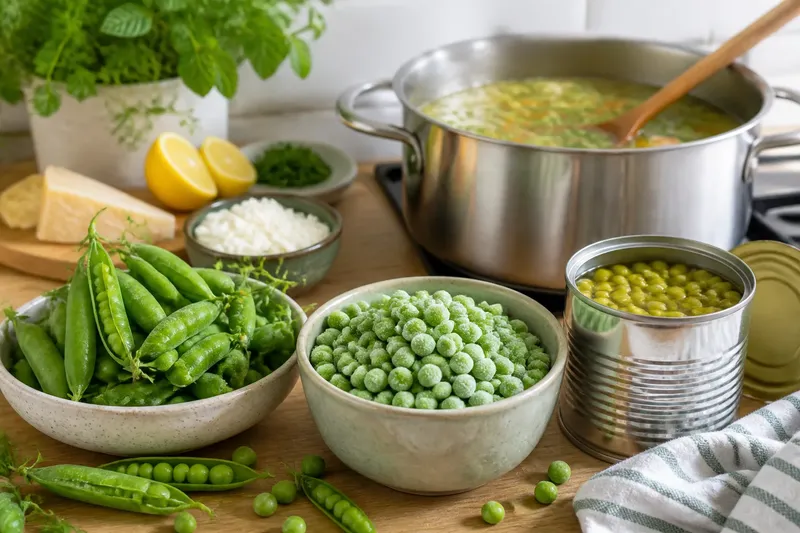
A pot of soup is simmering, a bag of frozen peas sits in the freezer and a tin waits in the cupboard. Fresh, frozen or canned peas can all go into supper, but heat and liquid change each form differently. The useful question is what texture and timing the dish needs.
Fresh peas need shelling and can bring a distinct bite; frozen peas are ready to portion and heat; canned peas are already cooked and soft. Each has a place, from a quick side to a stew.
Fresh peas bring a distinct, tender bite
Fresh peas are usually sold in their pods, so shelling is part of the preparation. Their texture depends on freshness and maturity: young peas may be tender and delicate, while more mature ones can be firmer and starchier.
For a simple side, cook fresh peas briefly in simmering water or in a pan with a little butter and a splash of water. Taste as they cook; aim for tender peas that have not collapsed. Add mint, lemon zest or chopped parsley at the end to keep those flavours distinct.
Fresh peas suit dishes where their bite should stand out. Fold them into a warm grain salad, add them near the end of a risotto, or scatter them through pasta with soft cheese. If shelling feels like too much work for the meal, another form may fit better.
Frozen peas make quick meals easier
Frozen peas are generally shelled and ready to cook. They can go straight from the freezer into many hot dishes, and gentle heating helps them hold their shape. Prolonged cooking can soften their texture and dull their colour.
For a side dish, put frozen peas into a small pan with a spoonful of water, cover briefly and stir until hot. Drain excess liquid and season. In soup or pasta, add them towards the end so they heat through without simmering for the whole cooking time.
Frozen peas work well in fried rice, savoury pies, quick soups and pasta sauces. They may be softer than freshly shelled peas, but they can retain their shape when handled gently. For a smooth soup or blended dip, the difference in texture matters less.
Canned peas are soft and ready to warm
Canned peas are cooked and packed in liquid. Drain and warm them for a dish, or use them cold after draining. Their soft texture suits thick soup, casserole, mash or a baked filling, but they can lose definition if stirred hard or cooked for a long time.
Add canned peas near the end of a stew or fold them carefully into a warm sauce. For a cold salad, drain them well so packing liquid does not thin the dressing.
Check the tin’s ingredient list and preparation guidance. The packing liquid may suit a blended soup, while draining is usually preferable for a salad where a thick dressing should cling to the other ingredients.
Choose peas by the texture your dish needs
For a short-cooked dish with a fresh finish, fresh peas can be a good fit. Frozen peas are handy when you want a quick ingredient that needs little preparation. Canned peas suit meals where softness is welcome or the peas only need warming.
- For a distinct bite: Check whether you have fresh peas that look sound; if so, shell and cook them briefly, but if not, use frozen peas and heat them gently.
- For a fast hot meal: Check whether frozen peas are available; if so, add them near the end of cooking, but if not, use canned peas and warm them briefly.
- For a soft, cohesive dish: Check whether the recipe welcomes soft peas; if so, drain and fold in canned peas, but if you need firmer pieces, use fresh or frozen peas instead.
- For a cold salad: Check whether distinct pieces matter; if so, use fresh or thawed frozen peas, but if using canned peas, drain them well before mixing.
- For a smooth blend: Check whether convenience or a softer texture matters more; if convenience does, use frozen peas, but if softness does, canned peas can be blended after draining as needed.
- For a recipe with a long simmer: Check when the peas are added; if they would cook for a long time, hold them back until near the end, but if they are meant to soften into the dish, use canned peas and stir gently.
Imagine you have cooked pasta, frozen peas, lemon and soft cheese, and want a quick meal with distinct pieces. Add the frozen peas to the pasta water near the end, then drain the pasta and peas together and fold them into the cheese with lemon. The expected result is warm peas that retain some shape; canned peas would make a softer sauce, while fresh peas would require shelling first.
When should you add peas, and can you swap forms?
Can frozen peas go straight into soup?
Yes. Add them directly to hot soup towards the end of cooking and stir gently so they heat through without becoming too soft.
Should canned peas be rinsed?
Draining is often enough, especially if the recipe already has broth or sauce. Rinse them if you want to remove more of the packing liquid’s taste, and follow any preparation guidance on the tin.
Do fresh peas need to be cooked?
Fresh peas can be eaten raw if they are clean and appealing in taste, though brief cooking suits many meals. Shell them shortly before use to keep their texture and flavour at their best.
Can fresh, frozen and canned peas be swapped in a recipe?
Often, but account for their different textures and cooking needs. Use fresh or frozen peas when distinct pieces matter; canned peas are already cooked, so add them near the end and stir carefully.
Match the pea to the meal
Fresh, frozen or canned peas are not identical, but the choice becomes straightforward when you know whether you want a distinct bite, an easy-to-portion ingredient or a soft pea ready to fold into a cooked dish. Fresh and frozen peas generally need cooking; canned peas mainly need warming.
For fresh, frozen or canned peas, choose the form that suits the meal’s texture and your available preparation time. A quick look at the dish and the product label can help you decide when to add the peas and whether to drain them.