Before the Fridge: How Drying, Salting and Canning Changed Food Preservation
Food preservation before refrigeration reshaped storage and cooking. See how drying, salting and early canning addressed local needs while changing food and work.
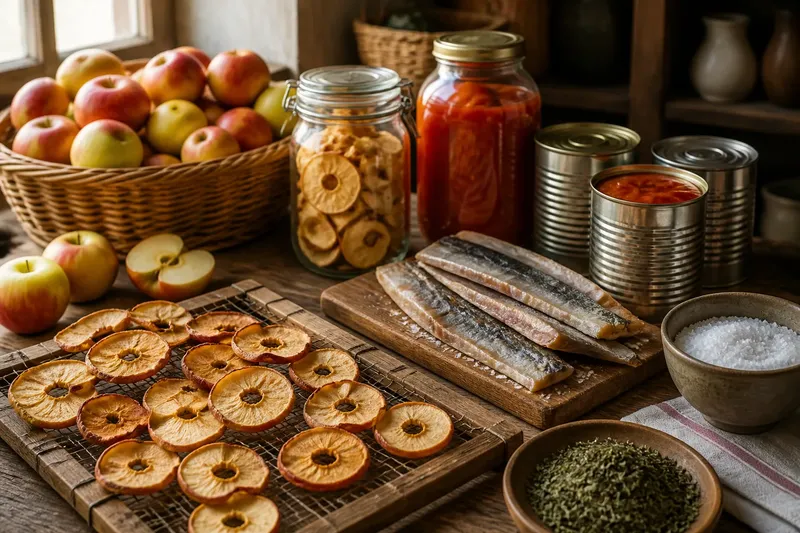
On a damp afternoon, a household might sort a basket of apples before bruised fruit began to spoil. Before domestic refrigerators, drying, salting and later canning offered different ways to keep some foods for later use. Their history is not a single march towards convenience: methods developed in particular places, using available materials, knowledge and fuel.
Food preservation before refrigeration depended on place and season
People preserved food long before refrigerators existed. Drying in sun or moving air, salting with available salt, and storing food in cool, dry or otherwise suitable places were among the approaches used across different societies. The details varied with climate, food traditions and access to materials; no one method served every community or ingredient.
Preservation could help people use a harvest beyond its freshest period or carry provisions on a journey. It did not remove the labour involved. Preparing food for storage meant sorting, cleaning, cutting, salting, drying or packing it, while later use could call for soaking, rinsing or cooking. The amount and timing of that work varied with the method and local circumstances.
Keep the historical claim modest: preservation offered options, not a universal solution to seasonal scarcity.
Drying made some foods lighter to store and carry
Drying removes much of a food’s moisture. It has long been used for suitable foods such as fruit, herbs, mushrooms and fish, though results depend on the food and the conditions in which it is prepared and stored. Removing water changes more than weight: a dried apple is no longer crisp and juicy, and dried herbs have a different texture from fresh leaves.
Those changes shaped how the food could be used. Dried fruit might be eaten as it was or added to a dish; dried beans needed cooking before they could be eaten. Some dried ingredients called for soaking or simmering. A method’s usefulness therefore depended on whether people had the time, water and cooking arrangements needed to prepare the stored food.
Imagine a household with more apples than it can eat and no cold storage. If its members slice and dry some of the fruit, the expected result is a lighter, chewy ingredient that can be kept for later use, not a crisp apple. The household has traded fresh texture for a form suited to storage and carrying.
Salting changed both preservation and the cook’s seasoning
Salt can draw moisture from food and alter the conditions in which many spoilage organisms grow. Its use in preserving fish, meat and vegetables also left a clear mark on taste. Salted foods became ingredients with their own character, rather than untouched versions of fresh ones.
Access to salt and the knowledge needed to prepare foods mattered, and the process was not interchangeable across ingredients or communities. Once a salted food reached the cooking pot, its saltiness had to be considered alongside the rest of the meal. A cook might use less added salt, rinse an ingredient when appropriate to the preparation, or combine it with less salty foods.
In a stew, for instance, salted fish could contribute flavour as well as substance. The practical decision was not simply whether to add fish, but how its existing salt would shape the whole pot.
Canning joined heat processing with sealed containers
Canning developed later than long-established methods such as drying and salting. It combines heat processing with a sealed container; its history is tied to efforts to preserve food for storage and transport. The method expanded the forms in which some foods could be kept, while relying on equipment and processes that differed from household drying or curing.
A sealed tin of tomatoes, for example, could be opened for a cooked dish outside the tomato harvest. Heat processing alters the contents, so canned tomatoes are not simply fresh tomatoes in a different package. Their softness and packing liquid may suit a sauce or soup, while a dish that depends on firm, raw slices calls for a different ingredient.
Canning changed the work involved at the point of cooking as well: a preserved food could be ready to add, though someone had already prepared and processed it. Its historical significance lies partly in that shift of where and when preparation happened, not in making every food identical or effortless.
What questions help explain a preserved food’s history?
Why did people dry food?
Drying reduced moisture and made suitable foods lighter to store or carry. Its value depended on local conditions and on whether the food could be prepared and kept appropriately.
How did salting affect meals?
Salt changed taste as well as the food’s keeping qualities. Cooks had to account for that flavour when combining salted ingredients with other foods.
When did canning enter food preservation?
Canning emerged later than ancient practices such as drying and salting, combining heat processing with sealed containers. It introduced a distinct way to prepare and store foods, with its own equipment and practical demands.
Did preservation eliminate seasonal food shortages?
No single method could do that. Preservation could make particular foods available beyond their freshest period, but access, preparation, storage conditions and local circumstances still mattered.
Match a preserved food to the job it can do
Historical methods make more sense when considered through their practical trade-offs. The following invented situation shows how a household might reason through a surplus without treating one method as universally best.
Say a household has a basket of apples, a dry place suitable for storing dried food, salt for other provisions, and access to sealed tins and the equipment needed for a sound canning process. Its members want some apples for later porridge and some for a dish where crisp raw texture matters. They sort the fruit, setting aside sound apples for drying and keeping crisp-textured fruit for eating fresh; they do not salt the apples or assume canning will preserve their fresh bite. The expected result is chewy dried fruit for porridge and fresh apples for the crisp dish. If suitable drying conditions or safe canning knowledge are absent, the household’s practical choice changes: it should not treat either method as an improvised substitute.
- Check whether the food is suitable for drying; if it is and appropriate drying and storage conditions are available, dry it for later use, otherwise choose another suitable preservation method.
- Check whether the dried ingredient needs soaking or cooking; if it does, plan for that preparation, otherwise use it in a dish that suits its dry texture.
- Check how salty a preserved ingredient tastes; if it is strongly salty, reduce added salt or choose less-salty ingredients, otherwise season the dish to taste.
- Check whether the recipe needs a firm texture; if it does, avoid a soft canned form, otherwise use that form where tenderness suits the dish.
- Check whether the canning process and equipment are appropriate; if they are not, do not improvise a sealed-food process and seek reliable food-safety guidance, otherwise follow a suitable established method.
- Check what preparation the stored food will need later; if it requires soaking or simmering, allow for that work, otherwise choose a form that fits the time and cooking facilities available.
Food preservation before refrigeration did not make all ingredients interchangeable. It gave people ways to prepare particular foods for storage and later use, with results shaped by local resources and methods. At the shelf, the same principle still helps: identify how the food was preserved, then choose a use that fits the form it has become.