The Natural Claim Does Not Explain the Whole Product
A natural food claim can sound reassuring without explaining the product. Learn what the phrase does and does not tell you before choosing a jar.
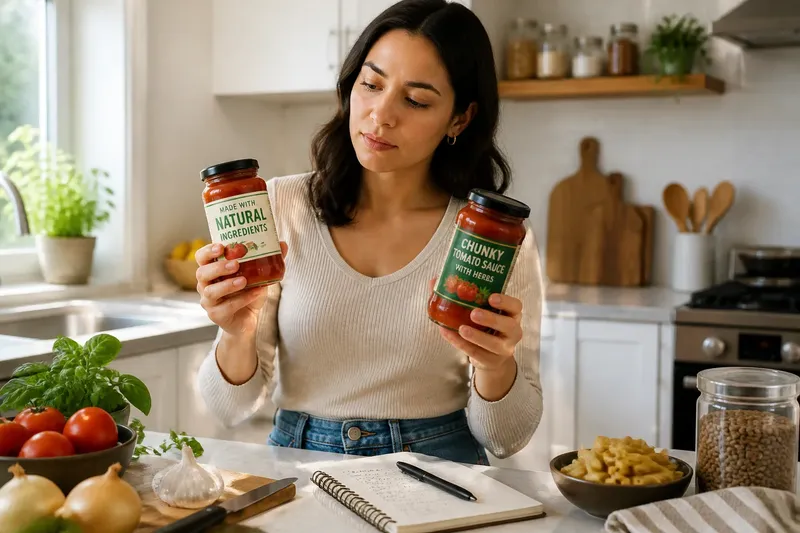
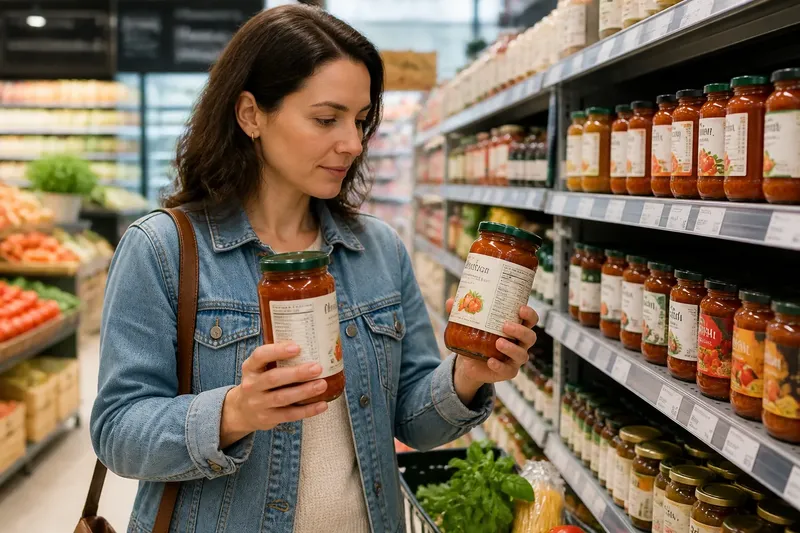
You’re choosing between two jars of pasta sauce when “made with natural ingredients” catches your eye. A natural food claim may shape your impression, but it does not explain the product’s flavour, how it was made or what the wording means in that market.
Imagine Maya is buying sauce for a weeknight meal. She wants a flavour that suits the dish, but the phrase on the jar leaves her wondering what “natural” is meant to convey. Instead of treating it as a promise, she asks a more useful question: what exactly is the maker claiming?
A natural food claim describes a presentation, not a complete recipe
On the front of a pack, “natural” can suggest simplicity or purity. But the word alone does not specify which ingredients are included or what standards the maker is applying. The exact phrase matters: “made with natural ingredients” may refer to selected components rather than making a claim about every part of the product.
Meaning can also depend on the product and the market where it is sold. Wording that appears clear at a glance may leave the boundaries of the claim unstated. So Maya treats it as a statement to interpret, not a rating that tells her whether the sauce is better.
She looks for nearby wording that makes the claim more specific. If the pack names a particular ingredient or describes a feature, she can consider that statement on its own terms. If it offers only a broad impression, she avoids filling in the gaps herself.
The phrase does not settle taste, processing or nutrition
A natural food claim is not a flavour description. It cannot tell Maya whether the sauce is sweet, sharply tomatoey, smooth or chunky. Nor does the word, on its own, explain whether the ingredients were chopped, cooked, blended or concentrated.
Nutrition is another separate question. The claim does not establish whether a sauce suits someone’s nutritional preferences or needs. Maya checks the relevant product information for those questions rather than reading a nutritional promise into a general front-of-pack phrase.
These distinctions help keep the claim in proportion. A label may make a statement about how a product is presented, while leaving its flavour, processing and nutrition unexplained. Each question needs information that actually addresses it.
Maya checks what the maker means by natural
She starts with the exact wording around the claim. Is it attached to the whole product, or does the pack name a particular ingredient? Does another line explain what the maker means, or does the slogan stand alone? These details help Maya understand the scope of the statement without assuming more than the pack says.
Next, she checks whether the claim is relevant to what she is buying the sauce for. If she wants a particular taste or texture, a product description may help more than “natural”. If she needs to avoid a specific ingredient, she checks the relevant label information rather than treating a general claim as a substitute.
- Check whether the wording names the whole product or one ingredient; if it is limited to one ingredient, treat it as a claim about that component, and if the scope is unclear, do not extend it to the whole jar.
- Check for an explanation near the claim; if the pack defines the phrase, use that stated meaning, and if it does not, regard the term as broad rather than guessing at a standard.
- Check whether the pack describes the sauce as smooth or chunky; if it matches the texture you want, keep it in consideration, and if it does not, choose a product whose description fits the dish.
- Check whether the maker names the flavour or featured ingredients; if those suit your recipe, the claim may be secondary, and if they do not, set the jar aside regardless of its front wording.
- Check the product information relevant to a dietary restriction; if it clearly addresses your need, use that information, and if it is missing or confusing, choose another product or ask a qualified professional when health is involved.
- Check whether you are using “natural” as a stand-in for a nutrition judgement; if you are, look for the information that answers your actual nutrition question, and if it is unavailable or unclear, avoid drawing a conclusion from the claim.
What does the natural wording answer?
Does “natural” tell Maya that a food is healthier?
No. The claim alone does not establish a product’s nutritional qualities. For a nutrition question, she looks for the relevant information on the pack or seeks qualified advice if a health need is involved.
Does “made with natural ingredients” mean every ingredient is natural?
Not by itself; the wording may refer to selected ingredients, and the pack may not define its scope. Maya checks whether the maker specifies what the phrase covers rather than assuming it describes the entire recipe.
Can the claim explain how the sauce was processed?
No, not in detail. If the way the product was made matters to her, she looks for a specific explanation and does not infer a method from the general word “natural”.
What if the wording is unclear or a health need is involved?
For an unclear claim, Maya avoids treating it as more specific than the pack makes it. If she is managing an allergy, medical condition or other health concern, she relies on relevant product information and asks a qualified professional where appropriate.
A worked choice makes the claim’s limits clear
Say Maya is making a tomato-and-lentil pasta bake and has two hypothetical jars in front of her. Jar A says “made with natural ingredients” but does not explain the phrase; its description says smooth tomato sauce. Jar B makes no natural claim, but its description says chunky tomato sauce with herbs. These are invented details for this example, not claims about actual products.
First, Maya notes that Jar A’s wording does not tell her which ingredients the claim covers, so she does not treat it as a description of the whole recipe. Next, she compares the stated product forms with her plan: she wants sauce to coat the lentils without a strong herb flavour. The hypothetical description of Jar A fits that preference better; Jar B’s chunks and herbs may not. She chooses Jar A for this meal because of its stated form, while recognising that its natural claim has not settled its flavour or nutrition.
That is how to read a natural food claim without letting it stand in for information it does not provide. Look for the maker’s specific meaning, distinguish a broad impression from a precise statement, and match the product details to the question you actually have. A slogan can prompt a closer look; it cannot answer every question about the food.